Every day
Meeting rooms
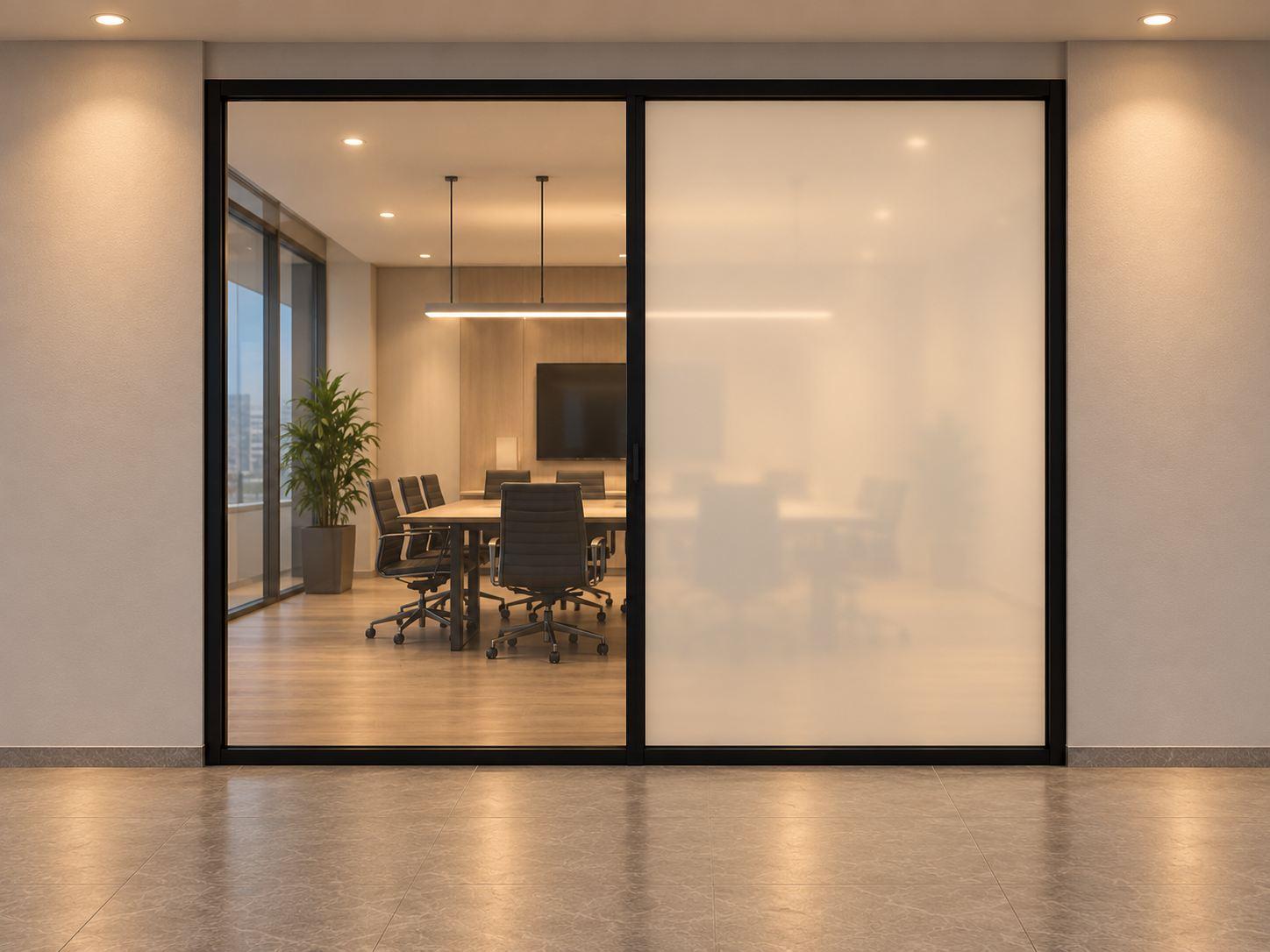
Open by day, private for meetings — as in the Jotun office project.
Switchable Smart Glass
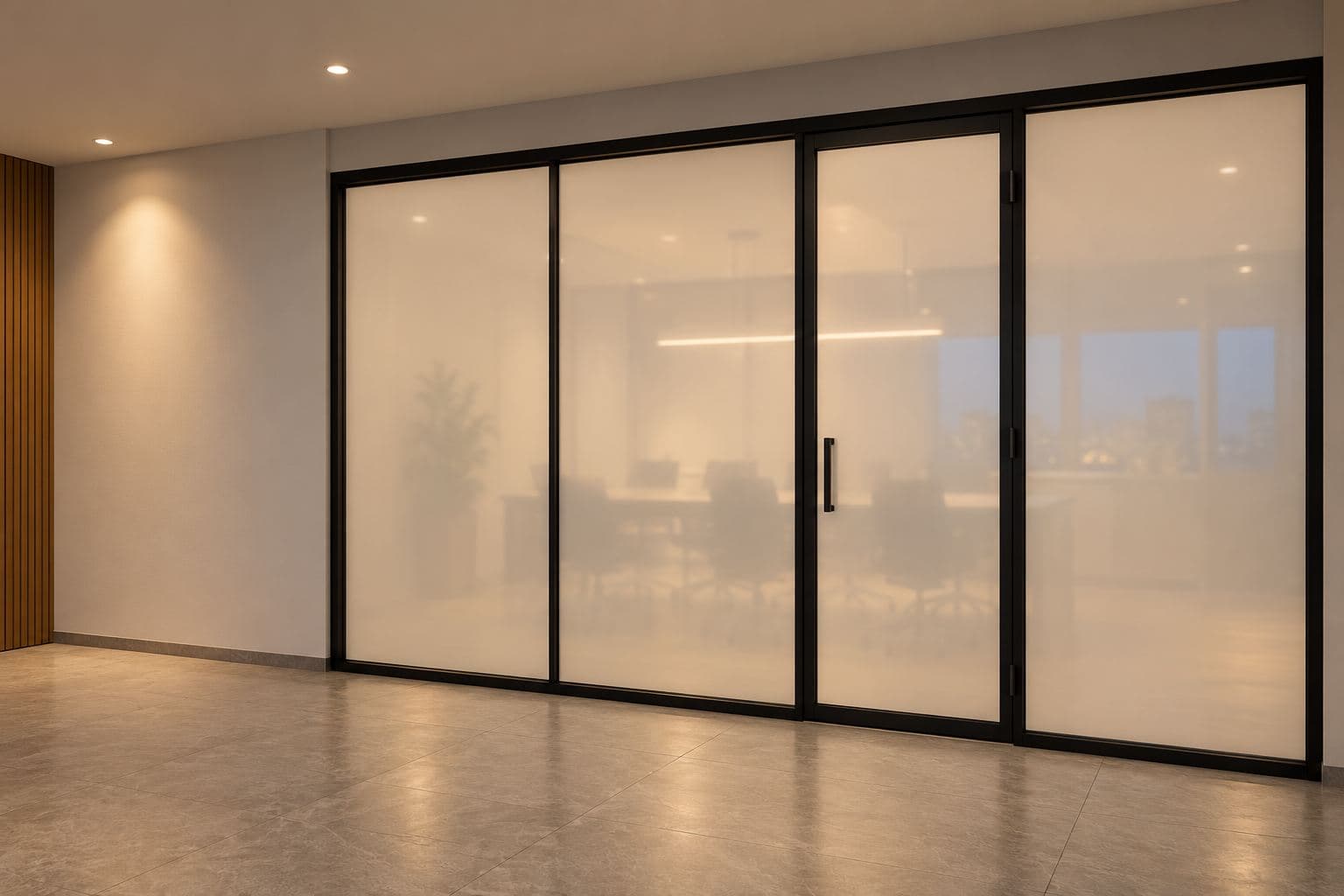
Clear when it is on, frosted when it is off.
The switch
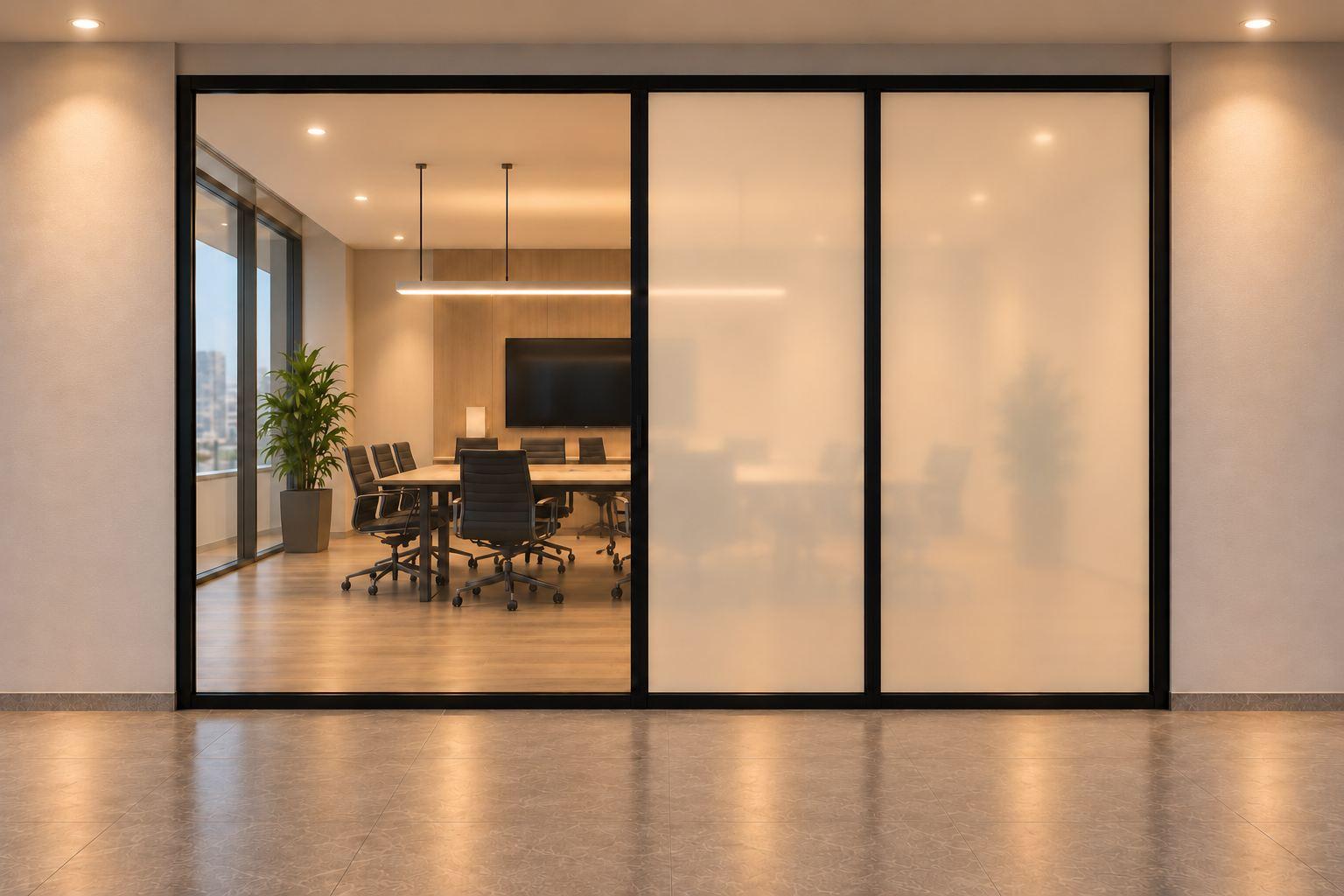
Goshenite: light transmission about 85% when on.
Where it works
Every day
Open by day, private for meetings — as in the Jotun office project.
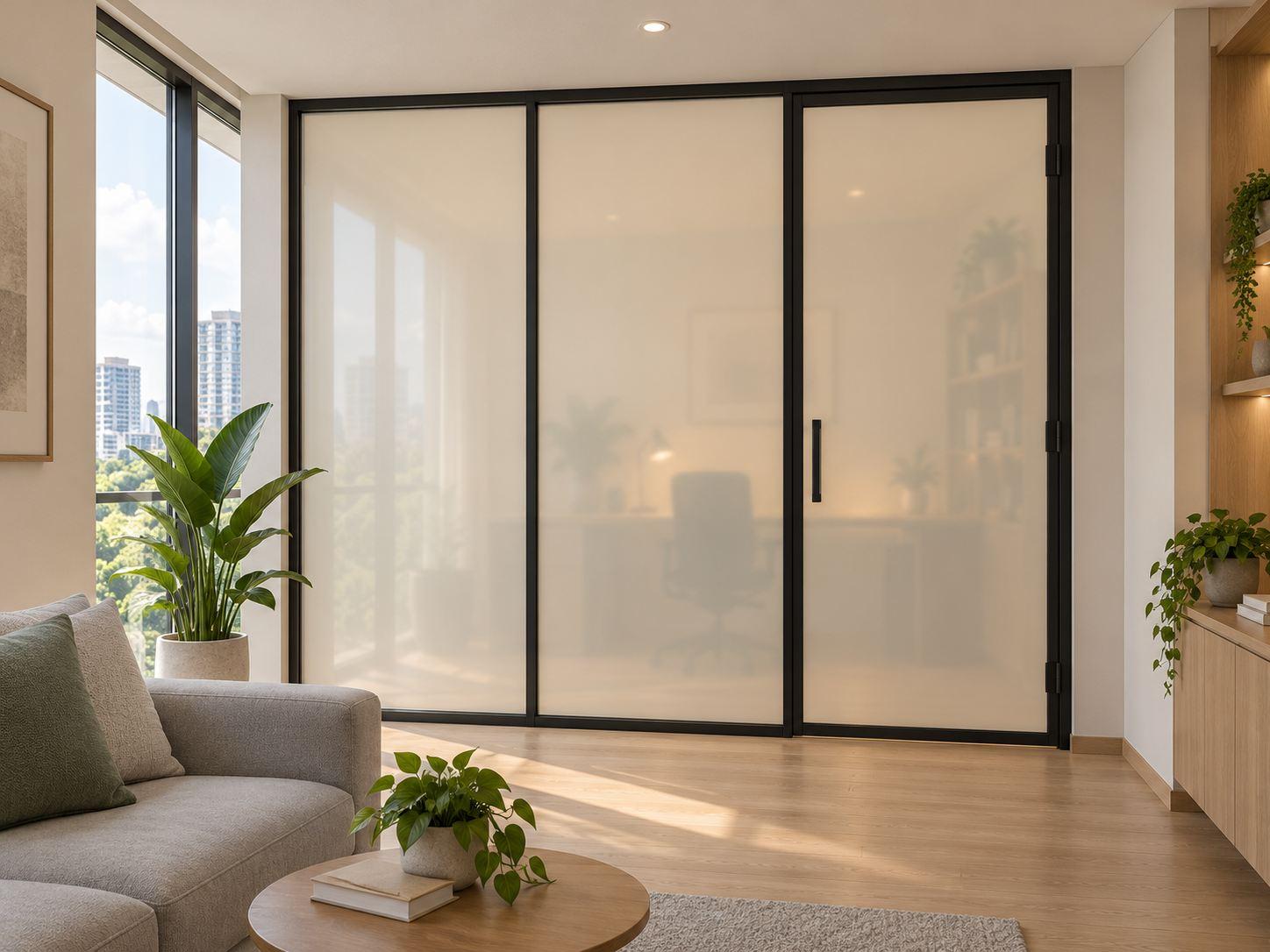
Every day
No curtains, and the room stays bright.
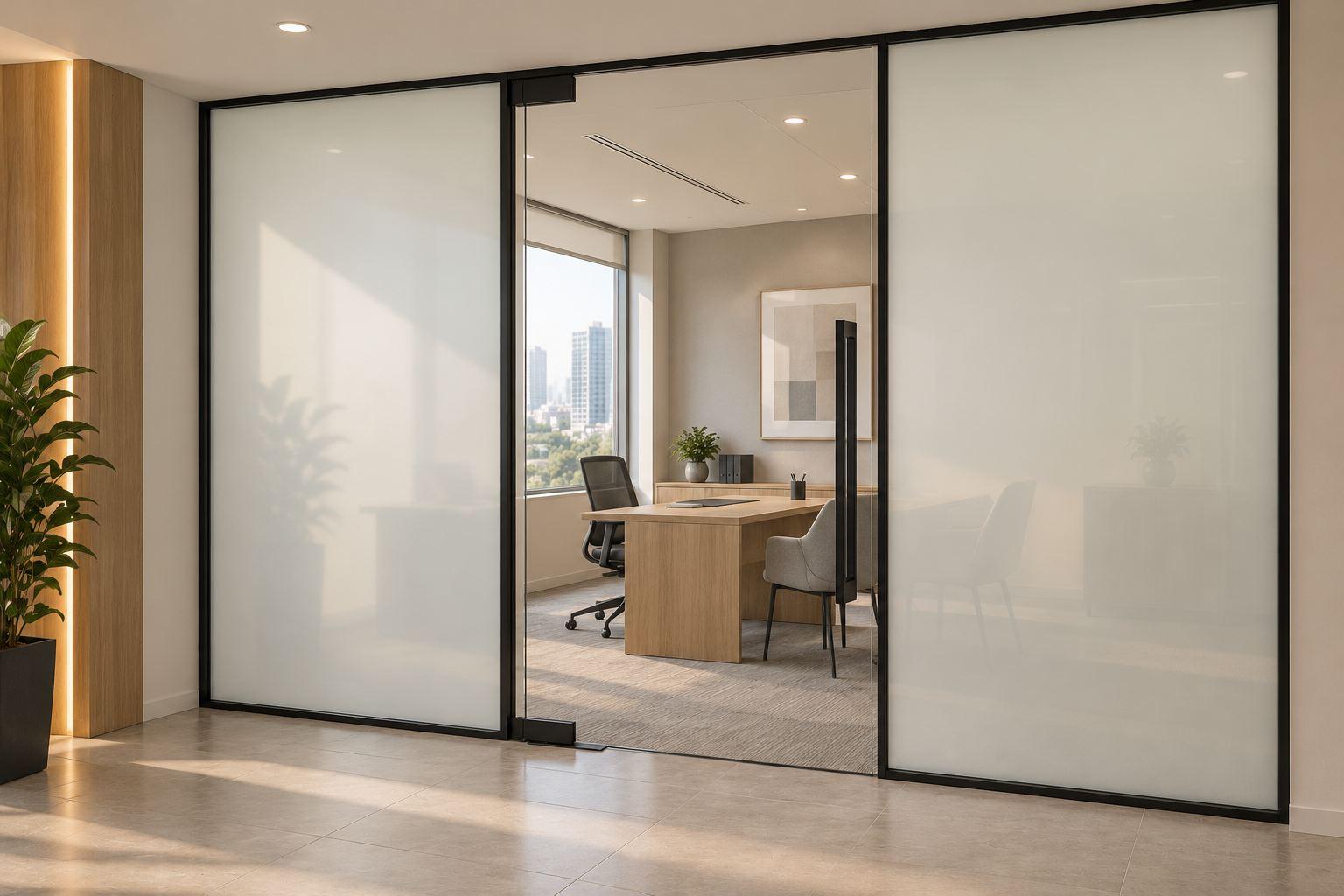
Look out over the floor, or close the view.
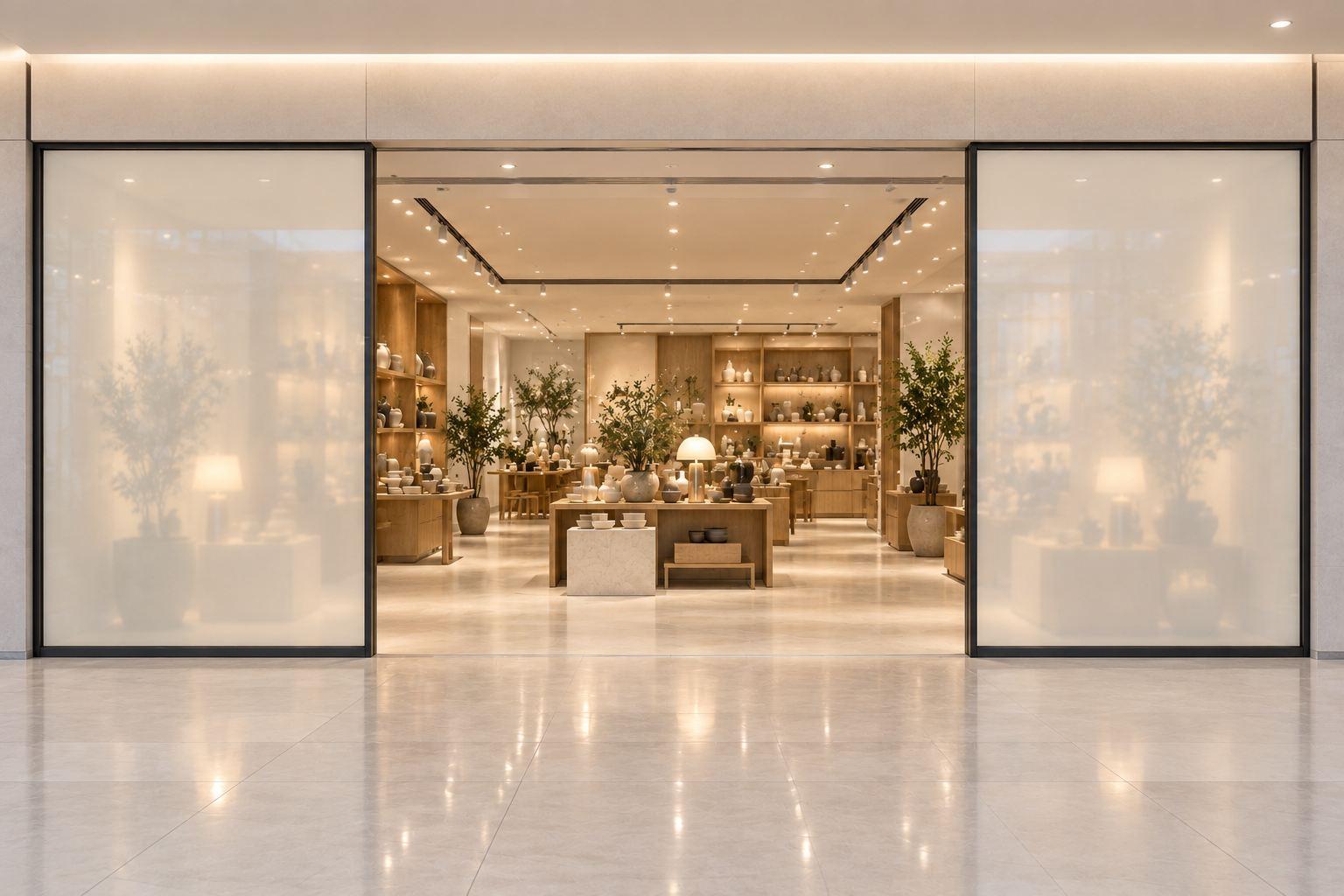
Open to the street, private when you need it.
Privacy that wipes clean.
Why smart glass
Privacy is something you want sometimes, not all day. Everything else buys it by taking away your light — and never gives the light back.
Blinds and curtains buy privacy by taking away your light. One press and smart glass gives it back the moment you no longer need the privacy. Even in the private state it is not blackout — it stays bright, just not see-through.
Use a soft cloth and a mild compatible cleaner, keeping the electrical connections dry.
The glass uses about 5 W per square metre while clear. With the power off, it returns to its frosted state.
OREOn demand, one press, and gone again.
curtainsDrawn, and the room is dark until you open them.
OREOne flat surface you wipe.
curtainsFolds of fabric — take them down, wash, dry, rehang.
ORENot blackout. It still lets light through.
curtainsBlackout curtains get close to full dark. For a bedroom, they win.
ORENeeds power and a transformer.
curtainsNone at all.
ORENone — only a voltage change.
blindsCords, gears, slats. Jamming and broken cords are the usual failures.
OREOne flat pane.
blindsSlat by slat.
ORENo lines. The whole pane is clear.
blindsSlats still cut the view and the light, even fully open.
OREBoth states, whenever you want.
frosted filmFrosted forever. The clear view is gone the day it goes on.
ORE—
frosted filmAdhesive film usually leaves glue behind.
Work out the size and power
Measure the whole opening — ORE works out how many panels it becomes. Not sure of the size? Measure it from a photo
For designers and architects
For contractors
Installed by ORE or an ORE Approved Installer in Kuala Lumpur, Putrajaya, Selangor, Penang, Negeri Sembilan, Melaka and Johor. Elsewhere, supply only.
Your contractor brings a 220–240 V supply to the controller position. ORE does everything from there to the glass.
Dry, ventilated and reachable for service — never sealed in a wall and never in a shower zone.
The cable leaves one edge of the glass. ORE sets the exit on the shop drawing and hides it in the frame, ceiling or a channel.
Sizes, holes, notches and curves are fixed before the glass is made. Finished Smart Glass cannot be cut or drilled on site.
Neutral-cure, non-acidic silicone that is compatible with PDLC film. Acidic sealants can damage it.
ORE sizes it with headroom: 50 W for about 8 m², 200 W for about 30 m², 300 W for about 45 m².
Pick a room and see the glass go private.
The full specification PDF, for your drawings.
ORE checks your sizes and site before quoting.
Questions
Smart Glass switches between clear and frosted at the touch of a switch. Inside is a thin liquid-crystal (PDLC) film: with power on, the crystals line up and the glass is clear; with power off, they scatter light and the glass is frosted.
It turns frosted, so the room stays private. ORE's standard Smart Glass is clear only while it has power.
Not near water. Smart Glass runs on power, so ORE does not install it in showers or beside basins. For shower glass, see ORE PureScreen.
Yes, as a laminated or insulated Smart Glass unit, with the transformer housed where it stays dry.
It is clear but not as clear as ordinary glass. There is a slight haze, more when you look from a steep angle — this is normal for PDLC glass.
It blocks a clear view but it is not blacked out. Daylight still comes through, and a person or object pressed close to the glass, or strongly backlit, can show as a blurred shape.
About 5 W per square metre while it is clear, and none when it is off. Mains power goes through an isolation transformer to about 60 V AC; ORE sizes the transformer with headroom for your total glass area.
A 13A power point from your contractor, an indoor place for the controller, and a cable route. ORE installs the glass and does the wiring from the glass to the transformer and controller.
With a wall switch and an RF remote as standard. Wi‑Fi / app control, smart-home integration and timers are options. Dimming to part-frosted is possible too, with a dimmable transformer added.
Usually up to about 1.8 m wide, with the height following the glass sheet — about 12 ft. A wider area is made from more than one panel.
Yes. Curved Smart Glass and insulated (double-glazed) units are both possible, made to order.
It can be laminated with a UV-printed layer. It cannot be combined with fabric laminated glass.
One public example is the Jotun office project, where Smart Glass is used in the office. More ORE work is on our Instagram.
No. Sizes, holes, notches and curves must be fixed before production; finished Smart Glass cannot be cut or drilled on site.
No. Standard ORE Smart Glass is not fire-rated or bullet-resistant; a project that needs either uses a certified specialist glass system.
Switch it off, then wipe with a soft cloth and water or a mild glass cleaner, keeping the electrical connections dry. Avoid abrasive pads and harsh chemicals.
24 months on the Smart Glass film and 12 months on the transformer and controller, for manufacturing defects. The glass itself, breakage, impact, water ingress and incorrect wiring or voltage are not covered.
For small quantities, Smart Glass is usually installed in 14–18 days, with about 14 days at the factory. ORE confirms the actual site programme.
ORE installs in Kuala Lumpur, Putrajaya, Selangor, Penang, Negeri Sembilan, Melaka, Johor. Elsewhere in Malaysia ORE supplies the glass only; contact ORE to confirm delivery arrangements.
Contact ORE to arrange a sample. Leave your name and phone to get the full specification PDF.